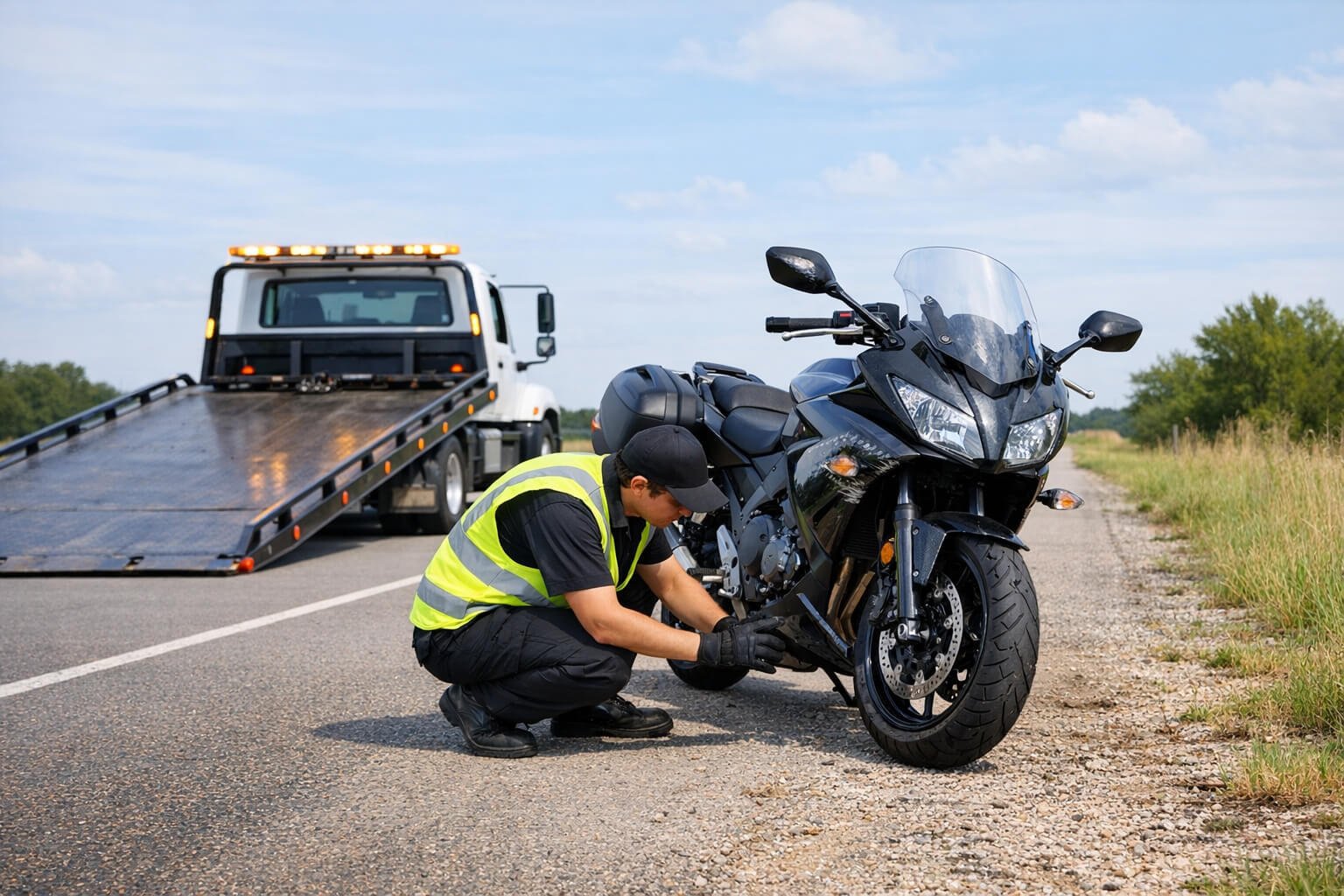
A tip-over or minor crash can leave a motorcycle looking mostly fine while something important is slightly bent, leaking, or out of alignment. If the bike now feels unstable, the brakes feel different, a tire is losing air, you smell fuel, or you see any fluid dripping, riding it again can turn a fixable situation into a loss of control or expensive damage. When you need help moving a bike without risking more harm, OK Towing Company can arrange motorcycle transportation in the Oklahoma City area, and you can reach them at 1 (405) 449-8100 to talk through options.
When you should not ride it again
Some post-crash issues are inconvenient; others are immediate safety problems. Any sign that the bike may not steer, stop, or stay planted normally is enough reason to avoid “just trying it.”
Skip the ride and plan to transport the bike if you notice:
- Steering feels wrong: wobble, shake, a new pull to one side, handlebars no longer centered when the front wheel looks straight.
- Braking feels different: a spongy front lever, a rear pedal that suddenly travels farther, grabbing, pulsing, or pulling during braking.
- Tire or wheel damage: a tire that’s visibly low, a sidewall cut or bulge, cords showing, or a bent rim edge.
- Leaks or strong smells: fuel smell, coolant smell, oil on the ground, smoke, or a hot electrical odor.
- Something rubbing or dragging: fender liner contacting a tire, a bent lever interfering with controls, a scraped component making metal-on-metal noise.
- Warning lights plus changed behavior: ABS or traction control lights after a hit matter more when paired with odd brake feel or instability.
A bike can idle and roll while still being unsafe at speed. The risk is highest when damage affects the tires, wheels, brakes, or front end, because those failures can show up suddenly during a swerve or hard stop.
Before you inspect: get yourself and the bike out of danger
If you’re still in traffic or on a narrow shoulder, the safest “inspection” is often getting to a better spot first. If the bike will move and it doesn’t feel like a wheel is locked or a tire is shredded, ease it to a wide shoulder, parking lot, or another protected area. If it won’t move normally, focus on visibility and separation from traffic.
Turn the engine off and take a second to check yourself for pain, dizziness, or numbness. Adrenaline hides injuries, and trying to wrestle a bike while you’re hurt is how small problems become big ones.
Once you’re stopped in a safer place:
- Let the exhaust and engine cool before touching anything near them.
- Look for a growing puddle or the sharp smell of fuel. If either is present, keep the bike off and keep ignition sources away.
- Snap a few photos of the bike and any visible damage or fluids. This helps later with insurance and with explaining symptoms to a shop.
A 10-minute safety check you can do without tools
You’re not trying to diagnose every possible issue on the roadside. You’re trying to catch the problems that make riding unsafe right now.
Tires and wheels: the quickest “no-go” checks
Tire and wheel damage is one of the easiest things to miss when you’re stressed, and it’s one of the most dangerous to ignore.
Walk around the bike and look closely at:
- Sidewalls: cuts, bulges, tears, or cords showing.
- Tread area: punctures, embedded debris, or a slice that’s opening up.
- Rim edges: flat spots, dents, or a bent lip.
- Valve stem: ripped, bent, or leaking.
If the tire looks low, treat it seriously even if it’s not completely flat. A slow leak can turn into a rapid deflation once the tire flexes and heats up.
If it’s safe to do so, roll the bike slowly a few feet and listen. A rhythmic scrape, a thump, or a “catch” can mean a bent rim, a tire problem, or something now contacting the wheel.
Front end and steering: small bends matter
A light crash can twist the front end just enough that the bike feels nervous or vague, especially at higher speeds.
Pay attention to:
- Handlebar alignment: bars straight but the bike tracks crooked, or the wheel looks straight but the bars aren’t centered.
- Fork tubes: fresh scuffs, a visible bend, or oil residue that suggests a fork seal leak.
- Steering feel: turning the bars feels notchy, tight, or uneven.
If the steering doesn’t feel smooth and predictable, riding can become risky quickly, especially if you have to brake hard or maneuver around traffic.
Brakes: feel and leaks matter more than looks
Brakes can look normal and still be compromised. A pinched line, a shifted caliper, or a damaged lever can change how the system behaves.
Check:
- Front brake lever: it should feel firm and consistent, not spongy or suddenly closer to the grip than usual.
- Rear brake pedal: note any big change in travel, resistance, or bite.
- Brake fluid: look for wetness around the master cylinder area, lines, and calipers. Brake fluid leaks can become dangerous fast.
If the brakes feel uneven, weak, or unpredictable, don’t test your luck in real traffic.
Controls and lights: confirm nothing is interfering
A bent lever or throttle housing can create a safety problem even if the bike “runs fine.”
Quick checks:
- Throttle: it should rotate smoothly and snap back on its own.
- Clutch lever: should move freely and return normally.
- Brake light: should activate from both the front lever and rear pedal.
- Signals/headlight: visibility matters if you end up moving the bike after dark.
If the throttle sticks, a lever binds, or a switchgear housing is cracked and shifting, it’s smarter to stop and transport the bike.
Chain/belt and drivetrain: look for rubbing and misalignment
After a tip-over, parts can shift just enough to start rubbing under load.
Look for:
- Chain: kinks, abnormal slack, missing clips, or obvious damage near the sprockets.
- Belt (if equipped): fraying, cuts, or abnormal tracking.
- Rubbing noises: anything contacting the chain guard, swingarm, or wheel is a problem.
A drivetrain issue may not show up until you’re moving, and that’s the wrong time to discover binding or misalignment.
Leaks and smells: treat them like stop signs
You don’t have to identify the exact fluid to make a good decision. What matters is whether the bike is actively leaking or smells like fuel.
- Fuel smell or dripping fuel: don’t start it, don’t ride it, and move away from the bike if the odor is strong.
- Oil on the ground: riding can starve the engine quickly.
- Coolant leak (on liquid-cooled bikes): overheating risk rises fast, especially in slow traffic.
If you see a leak that’s growing, transport is usually the safer and cheaper path.
Damage that looks minor but can be dangerous at speed
Some of the riskiest post-crash problems are subtle. The bike may start, idle, and even roll normally, then feel unstable or behave unpredictably above neighborhood speeds.
Common examples:
- Bent bars vs. twisted forks: either can make the bike feel “off,” but fork misalignment can also cause binding and instability.
- Wheel damage you can’t see at a glance: a rim that’s slightly out of true can create wobble or vibration as speed rises.
- Brake rotor issues: a slightly warped rotor can cause pulsing; a shifted caliper can cause rubbing and heat buildup.
- Front-end geometry changes: even small alignment changes can make emergency maneuvers less predictable.
If something doesn’t feel normal, treat that feeling as valid information. Motorcycles give feedback for a reason.
If it seems OK: how to do a cautious test ride without making things worse
Sometimes a bike passes the basic look-over: no leaks, tires appear healthy, brakes feel normal, controls work, and nothing is rubbing. In that case, any test should be short, slow, and reversible.
A safer way to test:
- Choose a parking lot or quiet side street, not a highway.
- Keep speeds low and avoid hard acceleration or aggressive braking.
- Pay attention to steering stability, brake feel, and any vibration or pulsing.
- Stop after a minute or two and check again for new drips, hot smells, or a tire that suddenly looks lower.
If anything changes as the bike warms up or moves, stop testing and plan to transport it.
When transporting the bike is the smarter choice (even if it “feels rideable”)
Even if the motorcycle seems mostly normal, riding it can be the wrong call when the consequences of being wrong are high.
Transport is usually the better move when:
- You’re far from home and can’t easily get help if the bike worsens.
- It’s dark, raining, or you’re near high-speed traffic.
- You can’t confidently rule out wheel, tire, brake, or steering issues.
- The bike won’t start reliably or stalls unpredictably.
- You need a shop to inspect it before you trust it again.
This is where professional motorcycle transportation can save you from a second incident and prevent additional damage from a failed ride attempt.
What to tell a tow/transport provider or repair shop
A clear description helps the right equipment show up and helps a shop diagnose faster.
Be ready to share:
- Your exact location and whether the bike is in a safe spot.
- Whether it rolls freely, steers normally, and whether either wheel seems locked.
- Any leaks, fuel smell, smoke, or electrical odor.
- What you noticed immediately after the crash: wobble, pull, brake changes, warning lights, or new noises.
- Where you want it delivered (home, dealership, or a specific repair shop).
Photos of visible damage and any dashboard warnings can also help, especially if the problem is intermittent.
Summary: prioritize tires, brakes, steering, and leaks
After a crash or tip-over, the safest decision comes from a quick reality check: if the bike isn’t steering and braking normally, if a tire or wheel may be damaged, or if anything is leaking or rubbing, riding it again is a gamble that can end badly. A short, slow test only makes sense when the basic inspection is clean, the bike feels truly normal, and you can do it in a low-risk area.
If you’d rather avoid the risk and get the motorcycle moved upright and secure, OK Towing Company can help with motorcycle transportation. You can call 1 (405) 449-8100 when you need to arrange a safe pickup and drop-off.


